 Prenota ora
 Castello di Malbork o Castello di Wawel: i due grandi castelli della Polonia a confronto
Un confronto diretto e sincero tra la capitale in mattoni dell'Ordine Teutonico sul Baltico e la sede reale dei re polacchi a Cracovia: cosa rappresenta ciascuno, cosa aspettarsi e quale si adatta meglio al Suo viaggio.
Malbork e Wawel sono le due visite a castelli che la maggior parte dei viaggiatori internazionali in Polonia finisce per considerare, eppure offrono esperienze quasi completamente diverse. Malbork è la capitale monastico-militare dell'Ordine Teutonico: una fortezza in mattoni di 21 ettari sul fiume Nogat nella Polonia settentrionale, il castello più vasto al mondo per superficie, fatto di mura difensive, sale voltate e storia crociata. Wawel è la sede reale dei re polacchi su una collina calcarea sopra la Vistola a Cracovia, un complesso più raccolto e stratificato dal punto di vista architettonico, che fonde elementi romanici, rinascimentali e barocchi, con la cattedrale dove i monarchi polacchi furono incoronati e sepolti. Questa guida li confronta con onestà attraverso architettura, storia, posizione, l'esperienza di visita stessa e quale dei due si adatti meglio a un dato itinerario — riconoscendo che per molti viaggiatori la risposta è entrambi, in giorni diversi dello stesso viaggio.
Architettura e atmosfera
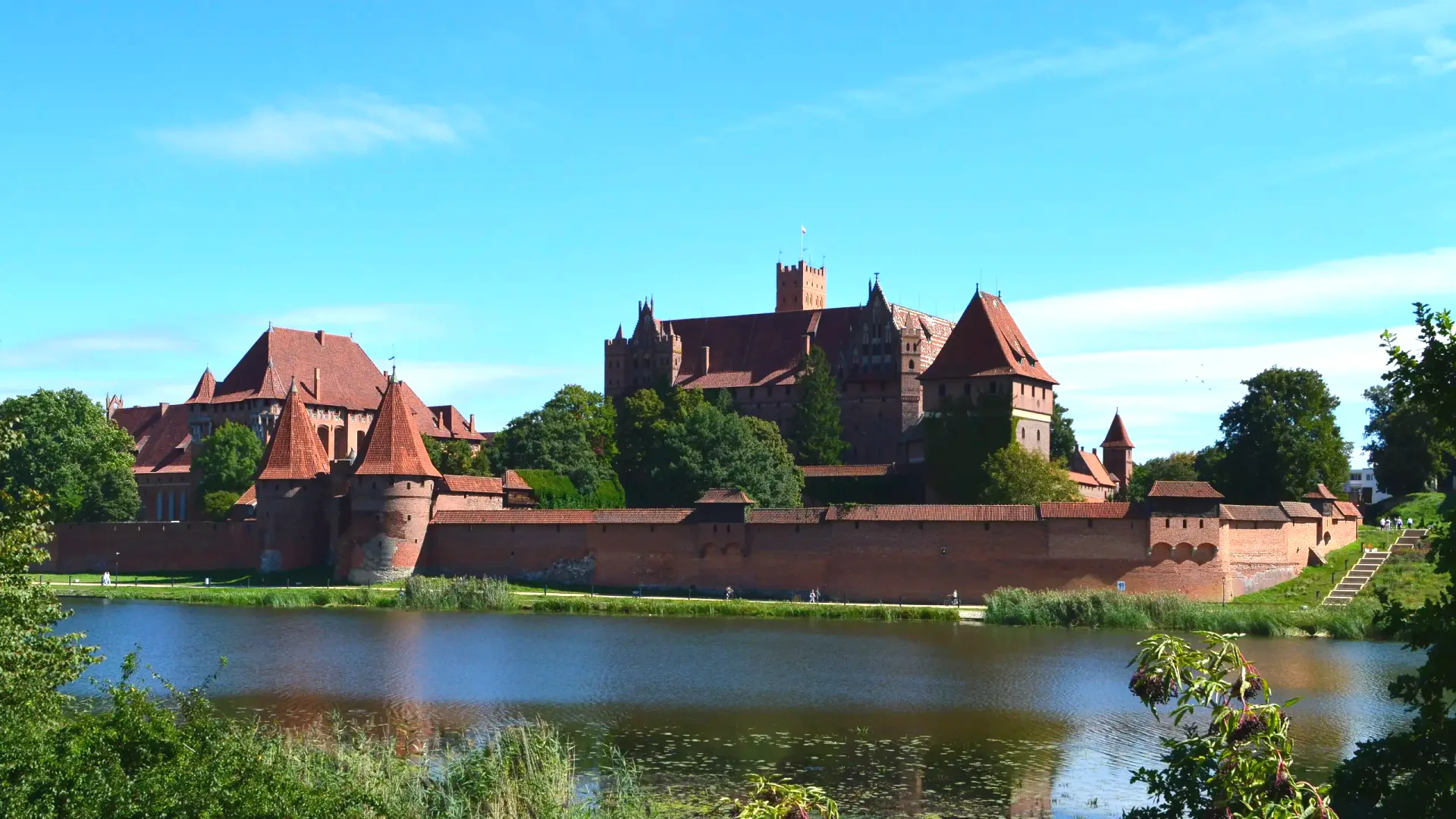
Malbork rappresenta il gotico in mattoni nella sua forma più ambiziosa. Costruito a partire dal 1274 dall'Ordine Teutonico nell'arco di circa 130 anni, è una fortezza stratificata di tre zone concentriche — Castello Alto, Medio ed Esterno — avvolte in mura difensive, porte fortificate, ponti levatoi e fossati. Il capolavoro architettonico è il Palazzo del Gran Maestro nel Castello Medio, in particolare il Refettorio Estivo con il suo soffitto voltato che si espande da un'unica colonna slanciata come una palma di pietra. L'atmosfera è monastico-militare: questa era la sede centrale di un ordine guerriero celibe, e l'edificio è progettato per proiettare tanto autorità spirituale quanto il fatto brutale del potere armato. Attraversando i cortili ci si trova all'interno di una capitale statale fortificata, non di una residenza.
Wawel è tutt'altra cosa. La collina è abitata sin dalla preistoria, la cattedrale presenta fondamenta romaniche dell'undicesimo secolo, e il complesso del castello reale fu sostanzialmente ricostruito nel sedicesimo secolo sotto Sigismondo I e Sigismondo II Augusto, diventando una delle grandi residenze rinascimentali dell'Europa centrale. Il cortile porticato in stile italiano, le Sale di Stato con i loro soffitti dipinti, il Tesoro della Corona, la cattedrale con la sua Cappella di Sigismondo e le tombe reali — il registro dominante è cortigiano, decorativo e stratificato stilisticamente. Dove Malbork è un unico registro coerente di mattoni fortificati, Wawel si legge come cinque secoli di gusto reale polacco accumulato su un'unica collina, con arcate rinascimentali che si aprono su cappelle gotiche accanto ad aggiunte barocche.
Storia: capitale teutonica contro sede reale
La storia di Malbork è la storia dello stato monastico dell'Ordine Teutonico. Costruito dal 1274, il castello divenne sede del Gran Maestro nel 1309 quando Siegfried von Feuchtwangen trasferì il quartier generale dell'Ordine da Venezia al Nogat. Per quasi 150 anni Malbork fu la capitale politica e militare di uno stato che si estendeva lungo il Baltico meridionale, finanziato dal commercio dell'ambra e dal traffico granario sulla Vistola. Il potere dell'Ordine fu spezzato nella Battaglia di Grunwald nel 1410, e nel 1457 il castello passò alla Corona polacca — una transizione che diede inizio alla seconda vita dell'edificio. Dopo essere stato gravemente danneggiato nel 1945 e ricostruito dal 1950 in poi, Malbork fu iscritto dall'UNESCO nel 1997, e la ricostruzione stessa fa parte di ciò che l'iscrizione riconosce.
La storia di Wawel è la storia della monarchia polacca. I re di Polonia furono incoronati nella Cattedrale di Wawel a partire dal XIV secolo, e la maggior parte di essi vi è sepolta: Casimiro il Grande, Władysław Jagiełło (il vincitore di Grunwald), Stefano Báthory, Sigismondo I, Sigismondo II Augusto. La cattedrale custodisce inoltre la tomba di Tadeusz Kościuszko e dell'eroe nazionale Józef Piłsudski. Il complesso del castello reale fu sede del governo fino al trasferimento della capitale a Varsavia alla fine del XVI secolo, dopo il quale Wawel perse gradualmente il proprio peso politico, conservando tuttavia il ruolo simbolico di cuore spirituale dello Stato polacco. È stato iscritto dall'UNESCO nel 1978 come parte del Centro storico di Cracovia, nella prima tornata di iscrizioni nella lista del Patrimonio mondiale dell'umanità. I visitatori interessati all'identità nazionale polacca gravitano verso Wawel; i visitatori interessati agli ordini monastici militari medievali gravitano verso Malbork.
Posizione, Trasporti e Logistica per Escursioni Giornaliere
Malbork si trova nel Voivodato della Pomerania, nel nord della Polonia, sessanta chilometri a sud-est di Danzica, sul fiume Nogat. Il modello standard è un'escursione giornaliera da Danzica: da trentacinque a cinquanta minuti di treno diretto per tratta, quindici minuti a piedi dalla stazione di Malbork al cancello del castello, con possibilità di trascorrere l'intera giornata in loco. I visitatori internazionali solitamente atterrano all'Aeroporto Lech Wałęsa di Danzica e si stabiliscono nella Città Vecchia per due o tre notti, considerando Malbork come la principale escursione giornaliera del soggiorno. Da Varsavia il viaggio è fattibile ma lungo — circa tre ore di PKP Intercity diretto per tratta — e viene solitamente combinato con un pernottamento a Danzica anziché tentato come andata e ritorno in giornata.
Wawel si trova nel centro di Cracovia, a pochi passi dalla Piazza del Mercato principale e dal centro storico medievale. Non vi sono questioni di trasporto: i visitatori che soggiornano a Cracovia salgono semplicemente la collina a piedi. Cracovia è di per sé una delle destinazioni più visitate della Polonia, con voli internazionali diretti per l'Aeroporto John Paul II di Balice, e Wawel è una tappa di un denso itinerario nella Città Vecchia che include i Sukiennice, la Basilica di Santa Maria, Kazimierz e, per molti visitatori, un'escursione giornaliera ad Auschwitz-Birkenau. Geograficamente i due castelli si trovano agli estremi opposti della Polonia: Malbork nel nord baltico, Wawel nel sud della Piccola Polonia. Combinare entrambi in un unico viaggio richiede un volo interno o un tragitto ferroviario più lungo tra Danzica e Cracovia.
La Visita: Percorsi, Durata, Affluenza
Una visita a Malbork è fondamentalmente una lunga passeggiata autonoma con audioguida attraverso un vasto complesso in mattoni. Il Percorso Standard (Percorso Storico del Castello) copre il Castello Alto, il Castello Medio e le sale principali in circa tre o quattro ore; il Percorso Completo, più lungo, aggiunge le esposizioni del recinto esterno e la collezione d'ambra e può durare cinque o sei ore. L'audioguida è inclusa in tutti i biglietti ed è disponibile in undici lingue — una delle offerte linguistiche più complete di qualsiasi grande castello europeo. Gli interni sono in gran parte non riscaldati, quindi uno strato caldo è essenziale tutto l'anno. La folla si concentra nettamente il sabato d'estate; le visite nei giorni feriali sono decisamente più tranquille.
Una visita al Wawel è segmentata. Le diverse parti del complesso — Sale di Stato, Appartamenti Privati Reali, Tesoreria della Corona e Armeria, la Cattedrale, la Tana del Drago, mostre speciali — hanno biglietti separati e nei giorni affollati richiedono fasce a orario prenotate in anticipo. Il tempo totale sul posto per una visita completa è ampiamente paragonabile a Malbork, quattro-cinque ore, ma l'esperienza è strutturata intorno agli spostamenti tra distinte zone con biglietto anziché scorrere attraverso un unico percorso con audioguida. Il Wawel è decisamente più affollato in termini assoluti — più di tre milioni di visitatori all'anno rispetto ai circa 600.000 di Malbork — e le Sale di Stato e la Cattedrale in particolare possono risultare sotto pressione in alta stagione. Prenotare in anticipo al Wawel in estate è essenziale, in un modo che a Malbork è consigliato ma non sempre strettamente necessario.
Quale Si Adatta al Suo Viaggio?
Scelga Malbork se vola a Danzica o soggiorna sulla costa baltica, se è attratto dalla storia militare e monastica medievale, se l'architettura gotica in mattoni e l'ingegneria difensiva sono ciò che desidera ammirare per mezza giornata, o se l'Ordine Teutonico e la Battaglia di Grunwald sono nomi familiari dalle Sue letture. Malbork premia i visitatori che apprezzano un edificio unico e coerente da esplorare con calma attraverso un'audioguida — più simile per atmosfera al Krak dei Cavalieri o alla città murata di Carcassonne che a un palazzo arredato.
Scelga Wawel se soggiorna a Cracovia, se è interessato alla storia reale e nazionale polacca, se desidera passeggiare attraverso sale di Stato arredate e una cattedrale dell'incoronazione tuttora in uso, o se la Sua estetica preferita per i castelli sono i cortili rinascimentali e i soffitti affrescati piuttosto che bastioni fortificati. Wawel premia i visitatori che apprezzano siti stratificati e multi-periodo in cui ogni sala racconta un capitolo diverso della storia di un paese. Per i viaggiatori con due settimane in Polonia, entrambi meritano sinceramente il tempo dedicato: Wawel come cuore spirituale del sud, Malbork come imponenza medievale del nord, con il treno tra Danzica e Cracovia o un breve volo interno come collegamento.
Domande frequenti
Qual è più grande, Malbork o Wawel?
Malbork è notevolmente più esteso per superficie: circa 21 ettari racchiusi entro le mura fortificate. Wawel copre all'incirca 7.000 metri quadrati sulla sommità della collina. Malbork è il castello più grande al mondo per estensione; Wawel è un complesso reale decisamente più raccolto.
Qual è il più antico?
La collina di Wawel è stata abitata e costruita fin dalla preistoria, con le fondamenta della cattedrale risalenti all'XI secolo. La costruzione di Malbork iniziò nel 1274. Le strutture del castello reale di Wawel e del castello teutonico di Malbork si sovrappongono in larga parte nelle loro fasi medievali, ma la storia del sito di Wawel è sensibilmente più antica.
Quale è più rinomato a livello internazionale?
Wawel è il nome più riconosciuto all'interno della Polonia e in tutta l'Europa continentale: è la sede della monarchia polacca e il luogo di riposo degli eroi nazionali. Malbork è maggiormente noto tra gli specialisti di storia medievale, gli appassionati di storia militare e i visitatori della costa baltica.
Posso visitare entrambi i castelli nello stesso viaggio?
Certamente. La maggior parte dei visitatori internazionali che desidera scoprire entrambi soggiorna da due a tre notti a Danzica per Malbork e da tre a quattro notti a Cracovia per Wawel, con un treno o un breve volo interno fra le due città. Un itinerario combinato ai due castelli si articola idealmente in sette-dieci giorni.
L'ingresso a Wawel è gratuito?
Il parco sulla collina, il cortile e alcune aree esterne sono generalmente ad accesso libero. Le zone interne a biglietto — Sale di Rappresentanza, Tesoro della Corona, Appartamenti Privati Reali, Cattedrale, Tana del Drago — prevedono ciascuna un'ammissione separata. Questo si differenzia da Malbork, dove un unico biglietto copre l'intero percorso con audioguida.
Quale castello è più affollato?
Wawel accoglie un numero decisamente superiore di visitatori all'anno: oltre tre milioni, contro i circa 600.000 di Malbork. Entrambi registrano il maggior afflusso nei fine settimana estivi, ma la pressione in alta stagione all'interno delle Sale di Rappresentanza di Wawel è più intensa per metro quadrato rispetto a qualsiasi ambiente di Malbork.
Quale vanta gli interni più spettacolari?
Sono spettacolari in modo diverso. Gli interni di Malbork sono costituiti da vaste sale voltate e ambienti monastici: il Refettorio dei Cavalieri, il Palazzo del Gran Maestro, la sala capitolare. Gli interni di Wawel sono saloni di rappresentanza arredati con soffitti affrescati, arazzi e collezioni reali. Se siete attratti dall'architettura, scegliete Malbork. Se preferite la decorazione cortese e le collezioni regali, Wawel.
Uno dei due si presta meglio come gita in giornata?
Wawel non è una gita in giornata: si trova all'interno di Cracovia, a pochi passi da qualsiasi hotel del centro storico. Malbork è invece la classica escursione da Danzica con treno diretto, circa un'ora per tratta. I viaggiatori che soggiornano in una delle due città possono includere il castello locale nel proprio itinerario senza dedicarvi spostamenti specifici.
Quale è più adatto ai bambini?
Entrambi funzionano bene, in modi diversi. Malbork punta sull'identità cavalleresca medievale per i più piccoli: armerie, segrete, tradizioni fotografiche con cavalieri in costume nei cortili, e un'audioguida in modalità per bambini. La Grotta del Drago di Wawel è da tempo una delle attrazioni preferite dai più giovani. I bambini piccoli potrebbero apprezzare maggiormente le dimensioni e l'atmosfera militare di Malbork.
Se ho tempo per visitare un solo castello in Polonia, quale dovrei scegliere?
Dipende da ciò che avete già in programma. Se il vostro volo arriva a Danzica, scegliete Malbork. Se arrivate a Cracovia, scegliete Wawel. Entrambi sono di livello mondiale a pieno titolo e nessuno dei due rappresenta un ripiego per aver perso l'altro.