What are the High, Middle and Outer castles, and how do they fit together?
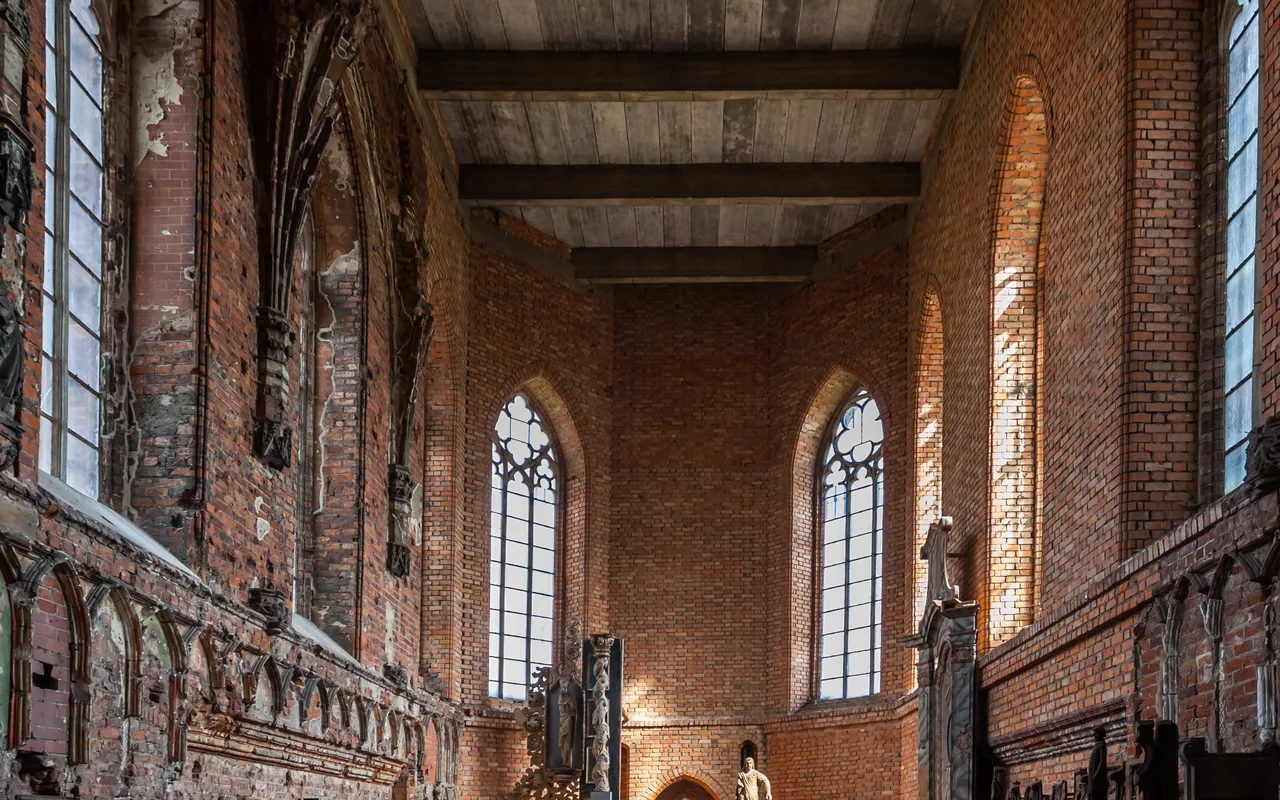
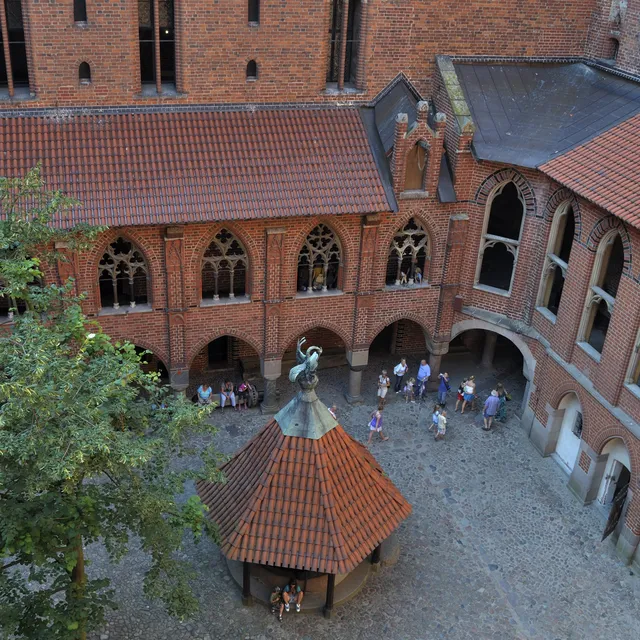
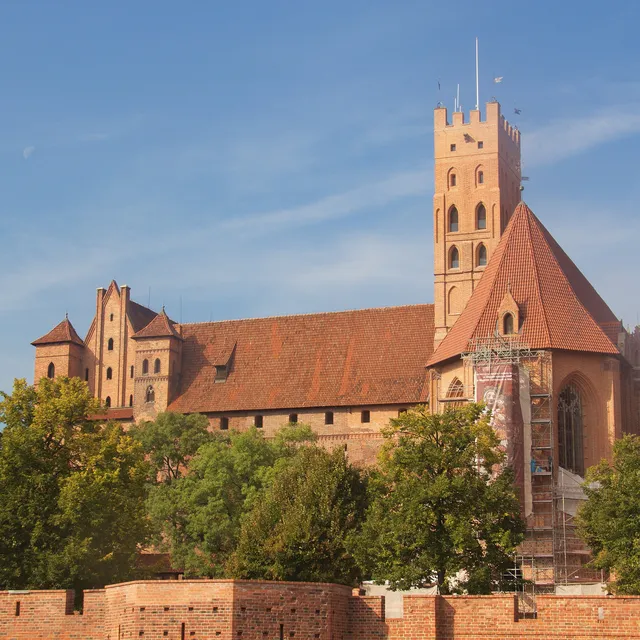
Malbork is not a single building but a layered fortress in three concentric zones, each added as the Order's needs grew. The innermost ring is the High Castle (Hochburg, Zamek Wysoki), the original convent begun around 1274. It is a four-winged claustral building wrapped around a small arcaded courtyard with a central well, modelled on a Cistercian monastery but fortified to monastic-military standards. Inside are the dormitories and chapter house of the knight-brothers, the treasury where the Order's relics and charters were kept, the kitchen with its enormous open hearth, and on the eastern flank the great church of Saint Mary, the spiritual core of the entire Ordensstaat.
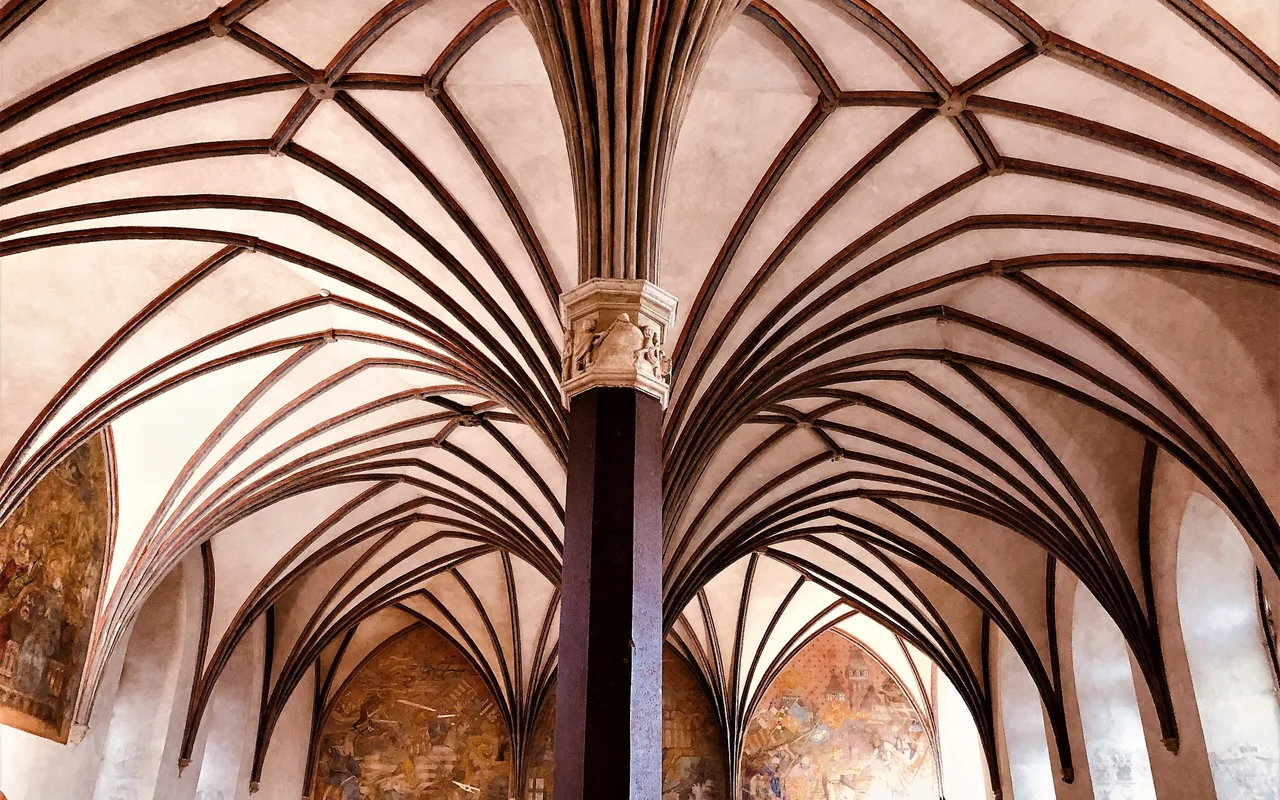
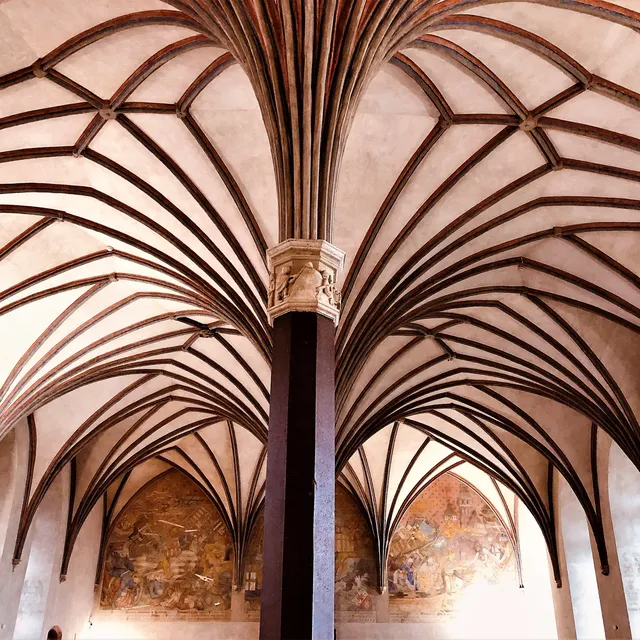
Stepping outward you cross into the Middle Castle (Mittelburg, Zamek Średni), built mostly in the fourteenth century to house the political functions that the High Castle could no longer absorb. Its centrepiece is the Grand Master's Palace on the western range, one of the most architecturally daring secular buildings of the late medieval north — a self-contained residence with its own chapel, private apartments, and the celebrated Great Refectory whose vaulted ceiling fans out from a single slender granite column like a stone palm tree. Across the courtyard stands the Knights' Refectory and the suite of guest halls used to receive crusading nobles from across Europe who came north each winter to ride with the Order on its raids into pagan Lithuania.
Beyond the Middle Castle the Outer Castle (Vorburg, Zamek Niski) wraps the complex in a broad outer bailey of workshops, armouries, stables, granaries, a brewery, an infirmary, and a chapel for lay servants. This was the working town within the walls — the engine room that supplied the knights with weapons, food, beer and bricks for further building. The three zones are separated by their own moats, gatehouses and drawbridges, so an attacker who breached the outer ring still faced two more fortresses inside, each defensible in its own right. That layered logic is what allowed a Polish garrison to hold the inner castle against a long siege in 1410 even after the field battle had been catastrophically lost.