← Back to Malbork Castle Tickets home
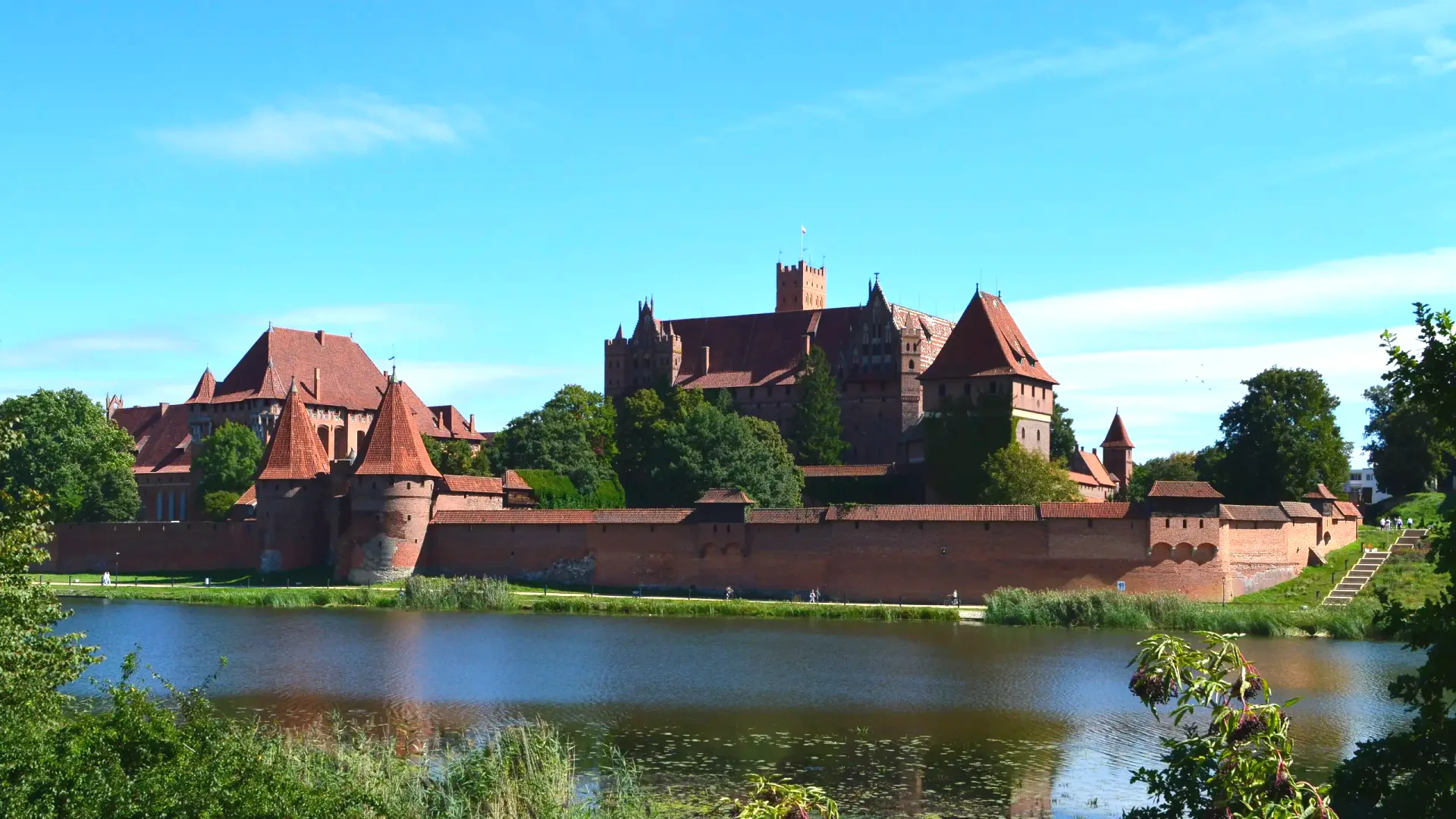
Projection mapping on the Middle Castle brick walls during the Siege of Malbork Son et Lumière

The Malbork Castle Light and Sound Show, Explained

What the seasonal evening Son et Lumière is, how to sequence it with the daytime visit, and what to expect from the projection mapping onto medieval brick.

Updated May 2026 · Malbork Castle Tickets Concierge Team

Malbork's seasonal evening Son et Lumière — known in Polish as Oblężenie Malborka, the Siege of Malbork — turns the brick façades of the Middle Castle into a vast projection surface for a synchronised lighting, music and narration performance after sunset. The show retells the story of the Teutonic Order, the 1410 Battle of Grunwald and the long siege that followed, the Polish takeover in 1457, and the castle's twentieth-century destruction and rebirth, with the fortress itself as the stage. For visitors willing to stay into the evening on a summer night, it is one of the most atmospheric ways to experience the castle. This guide explains what the show is, when it runs, how to sequence it with the daytime visit, and the small set of practical things worth knowing before booking the evening as well as the day.

What the Show Actually Is

Son et Lumière — sound and light — is a European theatrical tradition that began at the Château de Chambord in the 1950s and has since been adopted by many of the great heritage sites of the continent. The format projects images onto the building's own façades while a synchronised soundtrack of music, narration and effects tells a story tied to the structure's history. Malbork's version uses the brick walls of the Middle Castle as its projection surface, with viewers in the outer courtyards. The narrative arc compresses several centuries — the Order's arrival in Prussia, the building of the castle, the 1410 siege, the Polish royal centuries, the partition era, the 1945 destruction, and the postwar reconstruction — into roughly forty-five minutes to an hour depending on the season's programme.

The visual register is best described as projection mapping onto medieval brick. Architectural details are picked out and lit, illustrative sequences flow across the walls, and animation evokes the events of the siege without straining for cinematic realism. The result works because the building is the show: the brickwork already carries half a millennium of history, and the projections amplify what is physically there rather than substituting for it. Visitors who have seen Son et Lumière performances at Carcassonne, Versailles or the Pyramids of Giza recognise the genre; Malbork's particular version benefits from the sheer scale of the Middle Castle façade and the dark Polish summer sky that makes the projections read at their best.

When the Show Runs

The Son et Lumière is a seasonal performance running from late spring through early autumn — broadly late April or May through September, with the densest schedule across July and August. Exact dates and start times vary by year and are published on the official ticket portal at bilety.zamek.malbork.pl. Start times shift across the season because the show begins after sunset: late May performances may start around nine in the evening, midsummer performances closer to nine-thirty or ten, late-September performances earlier as daylight shortens. Always check the day's specific start time when booking. The show typically does not run in winter — short daylight makes earlier start times less atmospheric, and the cold outdoor courtyards are not viable for a full programme.

Tickets for the evening show are sold separately from daytime admission. Capacity is limited by the size of the outer courtyards, and summer-Saturday performances can sell out a few days in advance. Visitors who want to see both the daytime castle and the evening show in a single trip should book both tickets together once dates are confirmed — the operator's portal allows combined booking, and concierge services bundle the two as a single transaction. Bring a light layer even on warm summer evenings; the courtyards cool quickly after sunset and a full programme runs three-quarters of an hour to an hour outdoors.

Language, Subtitles and What to Expect

The narration is primarily in Polish, with English subtitles projected onto the walls alongside the visual sequences. The subtitle pacing is generous — the show is designed to work for international audiences as well as Polish ones — and the visual storytelling carries enough of the narrative that visitors with no Polish find the show readable on its own terms. Specific language arrangements can vary by season and special programming, so confirm current language options on the operator portal before booking if subtitles are a deciding factor. Visitors who have done the daytime castle visit and listened to the English audio guide arrive at the evening show with the historical context already in place, which makes the compressed narrative arc considerably easier to follow.

What to expect inside the courtyard: most visitors stand or move between viewpoints rather than sitting in a fixed auditorium. The projection covers a wide span of the Middle Castle façade, and watching from different points in the courtyard gives different framings. There are no major effects beyond lighting, projection and audio — no fireworks, no live performers, no pyrotechnics. The atmosphere is contemplative rather than theatrical. Visitors expecting a big-budget cinematic spectacle sometimes report mild disappointment; visitors expecting an architectural meditation with a historical narrative consistently rate it among the more memorable hours of their Poland trip.

How to Sequence the Day and the Evening

The natural rhythm for visitors combining the daytime castle with the evening Son et Lumière works in two halves. Arrive in Malbork on a late-morning or midday train from Gdańsk, eat lunch in town or at one of the cafés inside the castle complex, then enter the castle on a pre-booked timed slot in the early or mid-afternoon. Walk the Standard or Historical Route at a relaxed pace across three to four hours, finishing around six in the evening. Leave the castle, eat dinner in Malbork town — there are several decent restaurants on ulica Kościuszki and along the river — and return to the castle for the evening show, which typically starts around ninety minutes to two hours later depending on the season's sunset time.

Travellers who want to do both without a late-night train scramble back to Gdańsk often book a single night in a hotel in Malbork town. This also opens the option of an early-morning photograph of the castle from the west bank of the Nogat the following morning, before the next day's coach tours arrive. Visitors based in Gdańsk doing the show as a single long day should check the latest evening train times back to Gdańsk Główny before committing — the line runs late but not all night, and missing the last sensible train means an expensive taxi or an unplanned overnight. Concierge bookings typically flag the relevant train schedules at the time of confirmation.

Whether It Is Worth the Late Night

The honest answer depends on how the day unfolds. Visitors who arrive late, are already tired from a long day on the train, and have not eaten properly often find the additional hour outdoors more demanding than rewarding. Visitors who have paced the day with a proper dinner break, who like architectural atmosphere over cinematic spectacle, and who are not racing a late train back to Gdańsk consistently rate the show among the highlights of their Poland trip. Photographers in particular find the projections onto medieval brick give framing opportunities unlike anything available during daytime. Children old enough to handle a late evening can enjoy the visual register, though younger children may struggle with the late start time and outdoor wait.

Practical recommendation: if you are in Malbork in peak summer and the show is running, book it. If you are coming on a quieter shoulder-season weekday and the show is not scheduled on your date, the daytime visit alone delivers a complete experience and the absence of the show should not deter the trip. If you are visiting between November and March, the show is not in season — plan the day for daytime light, and consider returning in a future warm-weather visit if the evening programme appeals. Across the portfolio of European Son et Lumière performances, Malbork is one of the more atmospheric and least cinematic — well-suited to visitors who already engaged with the castle by daylight and want a second, contemplative pass through the courtyards.

Frequently asked

What language is the Malbork Son et Lumière in?

Primarily Polish with English subtitles projected onto the walls. Language options can vary by season — confirm current arrangements on bilety.zamek.malbork.pl before booking if subtitles are important to your decision.

When does the show season run?

Typically late spring through early autumn — broadly late April or May through September, with the densest schedule in July and August. The show does not run in winter.

How long is the performance?

Around forty-five minutes to an hour depending on the season's specific programme.

Do I need a separate ticket from the daytime visit?

Yes. The evening show is ticketed separately from daytime castle admission. Most visitors who want both book the two together; concierge services bundle them as a single transaction.

What time does the show start?

Start time follows sunset, so it shifts across the season — late May performances may start around nine in the evening, midsummer performances closer to nine-thirty or ten. Always check the specific start time for your date.

Is the show suitable for children?

Older children who can handle a late start time and an outdoor wait tend to enjoy the visual spectacle. Younger children may find the start time difficult and the courtyard cooling-down uncomfortable. Bring a layer for any child attending.

What should I wear to the show?

A light jacket or layer even in midsummer — the courtyards cool quickly after sunset. In May or September a proper warm layer is sensible. Comfortable closed-toe shoes for standing on cobbles.

Can I see the show without doing the daytime visit?

Yes, technically — the show is a standalone ticket. But the narrative arc lands better for visitors who have already walked the castle by day and seen the rooms the show references. Doing both in a single day or over two days is the standard pattern.

Are there seats, or do I stand?

Most visitors move between viewpoints in the courtyard rather than sitting fixed. There is limited fixed seating in some configurations — confirm current arrangements with the operator if mobility is a factor.

Will I miss the last train back to Gdańsk if I stay for the show?

Not necessarily — late evening services from Malbork to Gdańsk run reliably, but the very last sensible trains in either direction can be earlier than visitors expect. Check current PKP Intercity and Polregio schedules for your date before committing, or book a single night in Malbork town.